Share Post
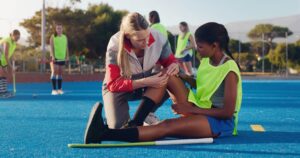
One of the most common questions athletes ask during rehabilitation is:
“When can I get back to my sport?”
It’s an understandable question. After weeks or months of rehab, athletes want to return as soon as pain decreases and movement feels normal again.
But here’s the reality:
Feeling better does not always mean you are ready.
Returning to sport too early remains one of the leading causes of reinjury. Modern sports medicine has shifted away from relying on timelines or subjective judgment alone and toward a more reliable approach: Return to Sport (RTS) testing.
Why Time Alone Isn’t Enough
Traditionally, return-to-play decisions were based largely on healing timelines:
- Six weeks after an ankle sprain
- Three months after shoulder injury
- Six to nine months after ACL reconstruction
While biological healing matters, research shows that time since injury alone is a poor predictor of readiness.
Athletes may be pain-free yet still demonstrate:
- Strength Deficits
- Poor Neuromuscular Control
- Movement Asymmetries
- Reduced Power or Endurance
Research following ACL reconstruction shows athletes who return without meeting objective performance criteria experience substantially higher reinjury rates. Athletes who failed return-to-sport criteria experienced reinjury rates around 38% compared to ~5% in those who passed testing
What is Return to Sport Testing?
Return to sport testing is a structured evaluation process designed to objectively determine an athlete’s physical and psychological readiness to safely resume competition after injury. Rather than relying on time-based clearance that allows return simply according to how many months have passed since surgery, a criterion-based approach evaluates measurable performance standards such as strength symmetry, movement quality, force production, hop testing performance, and psychological readiness using validated assessment tools.

Instead of guessing readiness, clinicians collect objective data across multiple domains:
- Strength
- Functional Performance
- Movement Quality
- Sport-specific Ability
- Psychological Readiness
Return-to-sport test batteries are widely used because they help evaluate sport performance and guide safer clearance decisions following injury.
The goal is not simply returning to activity but returning prepared.
Testing over Guessing
Sports rehabilitation has evolved from time-based clearance to criteria-based clearance.
Even after surgery restores joint stability, many athletes still demonstrate modifiable deficits affecting safe return to play. Criteria-based rehabilitation programs use staged testing to address these deficits before clearance.
Objective testing improves decision-making because it:
- Removes subjectivity
- Identifies hidden deficits
- Provides measurable benchmarks
- Helps reduce reinjury risk
Instead of asking “Has enough time passed?” clinicians now ask:
“Has the athlete demonstrated readiness?”
Key Components of Return to Sport Testing
Comprehensive return to sport testing evaluates multiple performance domains to determine true readiness for competition:
- Strength Testing
Compares the injured limb to the uninjured side, with most protocols requiring at least 90 percent symmetry before clearance. This ensures adequate muscular recovery and reduces reinjury risk. - Power and Explosiveness
Strength alone does not reflect sport readiness. Testing includes explosive movements such as jumping, sprint starts, and rapid changes of direction to assess force production and athletic performance. - Balance and Neuromuscular Control
Balance testing evaluates stability, coordination, and joint control during single leg and dynamic tasks. Injury often disrupts proprioception, or the body’s awareness of joint position, making balance assessment essential for preventing reinjury and restoring confident movement. - Range of Motion Assessment
Confirms full mobility has been restored while identifying compensatory patterns that may increase stress on surrounding joints or tissues. - Functional Movement Screening
Evaluates overall movement quality and coordination. Even when strength and flexibility appear normal, inefficient movement patterns can increase injury risk. - Sport Specific Testing
Replicates the demands of the athlete’s sport. Examples include cutting and pivoting for soccer athletes, throwing velocity for baseball pitchers, and landing mechanics for basketball players.

Psychological Readiness
Physical recovery alone does not determine successful return.
Psychological readiness, including confidence and fear of reinjury, is strongly associated with whether athletes safely return and avoid secondary injury.
Modern return to sport decisions increasingly combines psychological and physical testing.
What Does “Cleared” Actually Mean?
Hearing “you’re cleared” feels like the end of rehab, but it’s actually the beginning of the next phase.
Research on return-to-sport decision making shows that clearance does not mean an athlete is fully back to normal . Instead, it means the injury has healed enough to safely start progressing back into sport. Healing tissue and being prepared for competition are two very different things.
Being cleared typically indicates that:
- The injured area is medically stable
- Basic strength and movement goals are met
- And sport activity can gradually increase
It does not guarantee full performance, unlimited play, or zero reinjury risk.
Think of clearance as permission to progress, not proof that recovery is complete. The real return to sport happens in the weeks and months after clearance, as athletes rebuild workload tolerance, confidence, and performance capacity.
How Do You Know You’re Ready?
Athletes are ready to return to sport when readiness is demonstrated, not assumed.
True readiness combines:
- Healed tissue
- Restored strength and symmetry
- Efficient movement mechanics
- Sport-specific performance capacity
- Psychological confidence under pressure
Return to sport is not a single moment or date. It is a process of proving your body can tolerate the demands of sport consistently and safely.
The goal of rehabilitation isn’t just returning to play.
It’s returning prepared.
Questions to Ask Before Returning
Before stepping back into competition, athletes should ask:
- Have I completed objective return to sport testing?
- Is my strength near symmetrical side to side?
- Can I perform sport movements at full speed without compensation?
- Do I trust my body during unpredictable situations?
- Has my workload been progressively increased?
If the answer to these questions is yes, you’re not just returning, but you’re returning with purpose.
Ready to Take the Next Step?
If you’re recovering from an injury and wondering whether you’re truly ready to return to sport, objective testing can provide the answers timelines and guesswork cannot.
Return-to-sport testing helps identify remaining strength deficits, movement limitations, and performance gaps so you can return safely, confidently, and prepared for competition.
If you’re interested in completing return-to-sport testing, visit MPOWER Physical Therapy. Our team of physical therapists specializes in sports rehabilitation and performance-based testing designed to guide athletes through the final stages of recovery.
Book online today and visit any of our four locations in Midtown, Green Hills, Brentwood, or Franklin to get started.
Your goal isn’t just getting back on the field. It’s returning stronger, safer, and ready to perform.
Sources
Draovitch, P., Patel, S., Marrone, W., Grundstein, J., Grant, R., Virgile, A., Myslinski, T., Bedi, A., Bradley, J. P., Williams, R. J., Kelly, B., & Jones, K. (2022, January). The Return-to-Sport Clearance Continuum Is a Novel Approach Toward Return to Sport and Performance for the Professional Athlete. ScienceDirect. https://www.med.upenn.edu/pmi/events/https-www-sciencedirect-com-science-article-abs-pii-s1047847720300046-via-3dihub
Fick, G. (2025, October 6). Return-to-sport testing: Are you really ready to compete again?. Fick PT & Performance. https://fickptandperformance.com/return-to-sport-testing-are-you-really-ready-to-compete-again/
McPherson, A., Feller, J., Hewett, T., & Webster, K. (2019, March). Psychological readiness to return to sport is associated with second anterior cruciate ligament injuries. The American journal of sports medicine. https://pubmed.ncbi.nlm.nih.gov/30753794/
Return-to-sport testing: Complete guide to criterion-based clearance. Return-to-Sport Testing: Complete Guide to Criterion-Based Clearance. (n.d.). https://www.truesportsphysicaltherapy.com/blogs/the-complete-guide-to-criterion-based-return-to-sport-testing
Webster, K. E., & Hewett, T. E. (2021, January 1). Return to sport after Anterior Cruciate Ligament Reconstruction: Criteria-based rehabilitation and return to sport testing. Mayo Clinic. https://mayoclinic.elsevierpure.com/en/publications/return-to-sport-after-anterior-cruciate-ligament-reconstruction-c/
Wobker, B. (2025, May 15). ACL return to play. Lake Washington Physical Therapy. https://www.lakewashingtonpt.com/physicaltherapy/2020/4/8/acl-return-to-play
About the Author: Maria Martini

Related Posts
You finished a challenging workout, and now your muscles are sore. But how do you know if that soreness is [...]
Recovering from an injury can be frustrating, whether it stems from a sports accident, workplace incident, car accident, or everyday [...]

Lower back pain is one of the most common musculoskeletal conditions worldwide, affecting people of all ages and activity [...]