Share Post
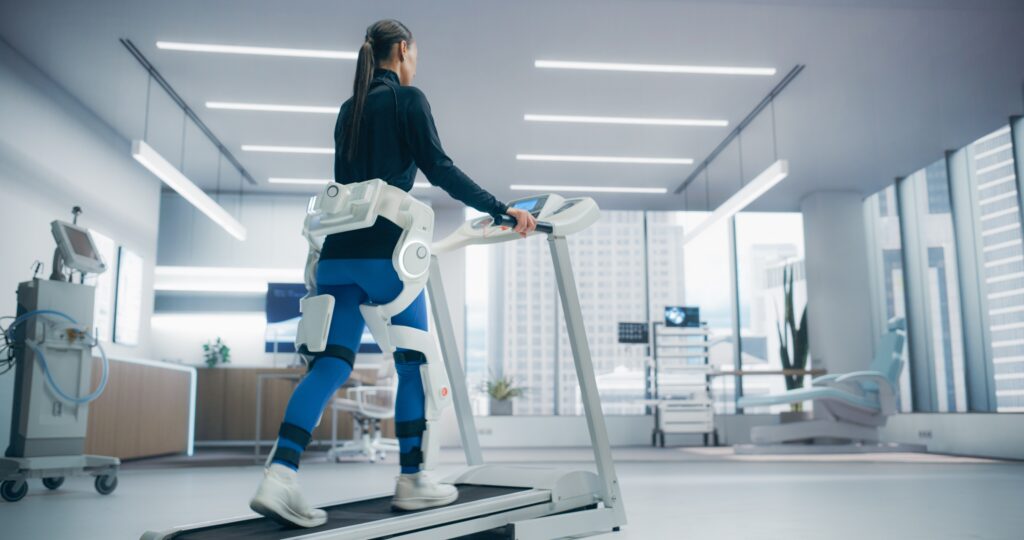
Editor’s note: this article references advancements in technology in the physical therapy field. MPower does not actively utilize the referenced technology.
Physical therapy is evolving faster than ever, driven by cutting-edge technology that is transforming how patients recover and how clinicians deliver care. From artificial intelligence and wearable devices to virtual reality and robotic systems, these innovations are making rehabilitation more personalized, efficient, and engaging.
In this post, we’ll explore the key technological advancements shaping the future of physical therapy and what they mean for patients and providers alike.
1. Artificial Intelligence in Physical Therapy
Artificial intelligence (AI) is increasingly being explored in physical therapy to support how clinicians assess movement, personalize treatment plans, and track patient progress over time. AI-enabled physical therapy combines advanced technology with clinical expertise to deliver rehabilitation that is more adaptive, efficient, and patient-centered. By analyzing movement data and tracking progress, some emerging AI-enabled tools can provide exercise feedback and insights that may help inform ongoing care.
At its core, AI relies on intelligent systems that learn from each patient’s movements and responses rather than following rigid, one-size-fits-all protocols. These systems can identify subtle changes in movement patterns, detect early signs of fatigue or compensation, and predict when a patient may plateau or need program adjustments. This data-driven approach allows therapists to make faster, more informed decisions while reducing trial-and-error in treatment planning.
Common applications of AI in physical therapy include:
- Personalized treatment plan development
- Continuous rehabilitation monitoring
- Virtual assistants and chatbots for patient support
- Enhanced movement analysis and clinical decision support
- Remote and virtual physical therapy services
- Gamification to improve motivation and adherence
Benefits of AI in physical therapy:
- Improved efficiency by helping reduce administrative tasks such as documentation and intake
- Enhanced patient engagement through interactive and technology-supported rehabilitation tools
- More consistent progress tracking and data organization across therapy sessions
- Increased accessibility through remote and digital rehabilitation options when appropriate
- Better support for clinical decision-making by surfacing trends in movement and adherence over time
Through some electronic medical record (EMR) features, digital intake tools, and AI-enabled rehab platforms, clinics may be able to streamline certain workflows and track patient progress more consistently over time. Depending on the technology, AI can support tasks like documentation assistance and exercise feedback, while also helping therapists identify trends in performance and adherence. Capabilities vary widely by platform, and these tools are best viewed as supports to clinical decision-making rather than replacements for hands-on evaluation and care.
2. Virtual Reality (VR) and Augmented Reality (AR) in Physical Therapy
According to the American Physical Therapy Association (APTA), virtual reality (VR) refers to a computer-generated simulation that can immerse users in an interactive environment. In physical therapy, VR and augmented reality (AR) tools are sometimes used to increase patient engagement and provide visual or sensory feedback during rehabilitation exercises. Rather than replacing traditional therapy, these technologies are typically used to support specific goals such as balance training, coordination, and functional movement practice.
Evidence for VR and AR in rehabilitation varies by condition, device, and program design. When used appropriately, these tools may help some patients stay more engaged in therapy and better understand movement cues, but they are often most effective when guided by a licensed physical therapist and integrated into a broader plan of care.
Example applications:
- Stroke rehabilitation: VR may be used to support task-specific practice by allowing patients to perform functional movements in simulated environments, such as reaching for objects or navigating virtual spaces, under therapist guidance.
- Real-world movement training: AR can overlay visual cues onto the physical environment to support balance, coordination, and movement awareness during select therapy exercises.

3. Wearable Technology and Remote Monitoring
Wearable technology, including activity trackers and sensor-based devices, is an emerging tool in physical therapy that can help patients and clinicians better understand movement and activity outside of clinic visits. Commonly collected data may include metrics such as heart rate, step count, activity duration, and general movement patterns. More specialized wearable systems may also estimate gait characteristics or joint motion, depending on the technology used.
Consumer devices like the Apple Watch, Fitbit, and Garmin are often used to track daily activity levels, which can give therapists additional context about how patients move between appointments. In some settings, sensor-based wearables or smart garments may be used to collect more detailed movement data during specific exercises or rehabilitation tasks.
Depending on the device and clinical application, wearable technology may support monitoring of:
- Activity levels and adherence to home exercise programs
- General movement patterns and gait characteristics
- Estimated range of motion during guided exercises
When integrated thoughtfully, wearable technology can help bridge the gap between in-clinic care and everyday movement. These tools are best used to support clinical decision-making and patient engagement, while hands-on assessment and therapist expertise remain central to effective rehabilitation.
Technology continues to influence how physical therapy is delivered, offering new ways to support patient engagement, track progress, and streamline certain aspects of care. Tools such as AI-enabled platforms, virtual and augmented reality, and wearable devices can complement traditional therapy when used appropriately and under the guidance of a licensed physical therapist. As these technologies evolve, they may play an increasing role in supporting accessible, personalized rehabilitation, while clinical expertise and individualized care remain the foundation of effective physical therapy.
Sources
American Physical Therapy Association (APTA). Virtual Reality.
https://www.apta.org/patient-care/interventions/virtual-reality
Mozafaripour, S. (2025, December 1). How AI is transforming physical therapy practice. University of St. Augustine for Health Sciences.
https://www.usa.edu/blog/artificial-intelligence-in-physical-therapy-cool-applications-fascinating-implications/
Papi, E., et al. (2024). Wearable technology for rehabilitation: A systematic review. BMJ Open.
9 Game-Changing Technologies Revolutionizing Physical Therapy. (2025). SPRY.
https://www.sprypt.com/blog/physical-therapy-digital-innovation-guide
Virtual Reality and Physical Therapy: 10 Questions Answered. e3 Diagnostics.
https://e3diagnostics.com/blog/virtual-reality-and-physical-therapy
Mironov, V. (2025, August 14). Why digital rehab is replacing paper plans in top clinics. Jelvix.
https://jelvix.com/blog/digital-rehab
About the Author: Nick Flory

Related Posts

Working out regularly is one of the best things you can do for your health, but without proper precautions, exercise [...]

One of the most common questions athletes ask during rehabilitation is: “When can I get back to my sport?” It’s [...]

Recovering from an injury, surgery, or movement limitation doesn’t start and stop when you walk into the clinic. What you [...]